



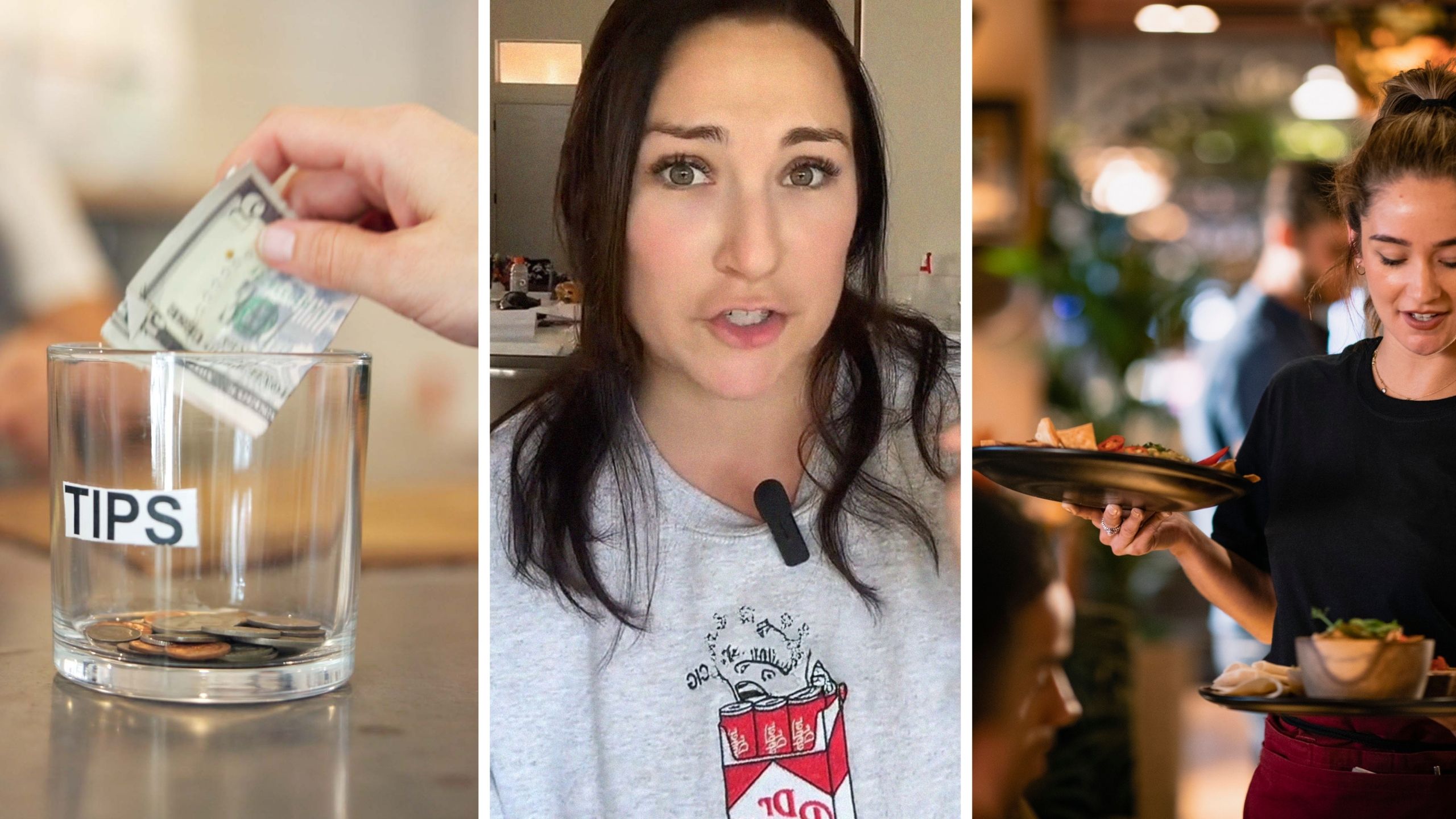
As a server for nearly 20 years, Melanie Stone has a lot of experience in how to make customers feel special. And now, she’s sharing her best tricks to the masses.
Servers are known for doing all kinds of tricks to get tips. But by implementing psychology into her tricks, Stone (@melanienicolestone) is one step ahead.
As explained in the video, she begins with one fundamental rule: “Communication is everything.” By this, she means that if you don’t acknowledge your customer 30 to 60 seconds upon arrival, they’ll get annoyed. She also notes that “people match your energy,” making it vital for them to be nice and friendly. Thirdly, she encourages servers to be on the customers’ side and act as their “attorney”—even if it means challenging the kitchen.
One of the most important tips, in Stone’s eyes, is drink refills. If someone has a drink—especially a cocktail, wine, beer—and it’s below 50%, servers should ask if they want a refill. She notes how, in her experience, 80% of the time, people at least say they’ll get a refill later. According to the server, it is also a smart way of upselling because you’re offering to refill the thing you know they already like. She also advises people to ask in a “cute” way and to give them multiple choices. Having a playful vibe/service isn’t just good for money. It’s also, according to her, a lot more enjoyable.
She also remarks how “you’re in control of everything.” In turn, you should always tell the table your plan, such as having to deal with another table, and keep them in the loop.
Ultimately, the vibe should be “lowkey,” “cute,” and “elevated.”
“Remember that serving can be like dating,” she says. “Some people are just not for you. Some people may be the nicest, sweetest, quietest, whatever, but they’re not your style, so that’s OK. But it’s fine. All you wanna do is give good service, expect their needs.”
“Expecting” customers’ needs is another big one for Stone. This can include bringing an iced tea before they run out to providing a hot towel for a spillage. She emphasizes that doing these kind of things “really are important,” and people really do “take notice.”
Going the extra mile “shoots your tips up and up and up,” and you get a few regulars, Stone says. She also encourages people to show their personality and reiterates that No. 1 is “always” communication.
“Let them know what’s going on, and then you will get massively tipped,” she says.
In a follow-up video, Stone shares a trick of what to do if you don’t have time to order: Drop off their drink, say you’re giving them a moment to cheers and that you’ll check on something in the back and be back in a minute.
@melanienicolestone Let’s get that 20% and some good regulars #serverlife #servertok #increaseyourtips #tippingculture #serverproblems
Servers Chime In
Fellow servers flocked to the comments.
“The first one is definitely one of my tactics, it always works,” one wrote. “People don’t mind waiting when they know why (within reason).”
“Be a problem preventer, not a problem solver!” a second advised. “If their drink is low, bring them another without even asking!”
While a third said, “Ex-server and bartender who now owns a restaurant: these are amazing tips. Two of my biggest pro-tips for newbies are always ‘Communication’ (guests will wait patiently as long as they know you’re on top of things) and ‘you run your section, they don’t run you.’ Spot on.”
A fourth commenter gave a customer’s perspective, saying, “These are spot on hospitality at its roots tips- so nice to see someone be kind and not just flipant that really appreciates their craft and customers. We all just want reciprocity at the end of the day, and follow the golden rule.”
Are There Any Other Psychology-Backed Tips?
As it turns out, Stone’s tips were the tip of the iceberg, with a fellow server and psychology expert also sharing their view.
In the clip, which was posted by user Scarlett (@scarlettreadspeople), two “tricks” to win over customers were explained: the Ben Franklin effect and the “Mini Conspiracy” method.
For the Ben Franklin effect to work, you need to ask someone a favor. By doing this, you are effectively tricking that person into thinking that they like you more than they actually do. Apparently, it all has to do with cost-benefit analysis. “They wouldn’t do a favor for someone they didn’t like,” she says.
She later adds, “This works because they think, ‘Well, if I’m helping her, she must be worth helping.’ And that actually in turn makes them, like, you more.”
Meanwhile, the “Mini Conspiracy” method refers to making the customer feel like they have exclusive knowledge. An example includes giving them “insider” information on which dish is actually better. “Just bringing them in on the secret, it makes them feel important, it makes them feel valued, and it makes them feel like they’re in the know,” she says.
UPDATE: In an email comment to BroBible, Stone said, “The goal of my video was to prove how important communication is in the art of service. It can change everything. I absolutely loved being a server and loved connecting with people. I feel like being a great server is a lost art. It’s been fun to see so many people engage with the topic and share their own experiences.”