



iStockphoto / Jerome Miron-Imagn Images / Michael C. Johnson-Imagn Images
Brendan Sorsby will not play college football in the 2026 season. He will instead move onto the NFL by way of the Supplemental Draft.
A gambling addiction threatened his eligibility. He opted to forego his final year of school amid an offseason of backlash.
Sorsby’s agent, Ron Slavin, feels bad for Texas Tech. They’ve received the brunt of the criticism for their handling of the situation.
He paints Cincinnati as the true villain. The Bearcats, in his eyes, prioritized football success over addiction.
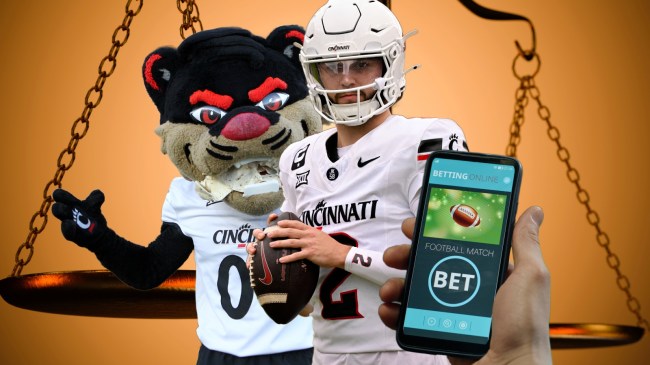
Cincinnati knew about Brendan Sorsby’s gambling activity.
That news has been previously reported. Matt Hayes of USA Today revealed earlier this year that the school was alerted of the quarterback’s sports betting in 2025. It did nothing about it which could lead to NCAA sanctions.
The Cincinnati athletic department was alerted in August that star quarterback Brendan Sorsby was gambling prior to the start of the 2025 season, two people with direct knowledge of the situation told USA TODAY Sports on Monday.
The Big 12, which includes Cincinnati, uses ProhiBet, a compliance driven app every student-athlete in the conference must download on their phone. The app notifies universities when athletes attempt to sign up for betting platforms or place prohibited wagers.
By knowing Sorsby was gambling and playing him anyway, Cincinnati could face NCAA scrutiny. Sorsby is under NCAA investigation after reportedly making “thousands” of online bets during his career, according to ESPN.
The Bearcats did not bench Sorsby. He played in 12 contests. Cincinnati won seven of its first eight games before finishing 7-5.
Slavin appeared to confirm the reports, though he suggested that the Bearcats’ knowledge of the situation dates back one year prior.
Sorsby’s agent Ron Slavin: “The people I feel worse for besides Brendan is Texas Tech. I think where they messed up was they talked too much. If anybody should be questioned or be catching heat it should be Cincinnati because they knew for 2 years and never said anything…” pic.twitter.com/QrMnyKeEkO
— 105.3 The FAN (@1053thefan) June 17, 2026
Slavin says Cincinnati “knew for two years and never said anything and didn’t do anything about it.” He applauded Texas Tech for supporting Sorsby through his addiction.
The quarterback underwent treatment at a rehab facility in May. The Red Raiders fought for his eligibility. Right or wrong, they believed that playing football and being surrounded by teammates was the best possible thing for his recovery.
Slavin says Texas Tech valued Sorsby as a person. The school wanted to see him move past the gambling issues to succeed on the field. Of course, there was an added benefit following a pricy investment.
Much of the public outrage was linked to Texas Tech’s decision to play Sorsby. The Big 12 requested that the school consider a suspension. It refused.
On one hand, that criticism is warranted. The program could’ve supported Sorsby without putting him in the lineup. That would allow for 100% of the focus to be dedicated to his addiction. It would’ve satisfied demands for accountability, too.
Still, the Red Raiders stressed both football and mental health. Slavin insists they did nothing wrong. Instead, the agent places blame on the Bearcats. Cincinnati, according to Slavin, prioritized wins over Sorsby’s addiction.