


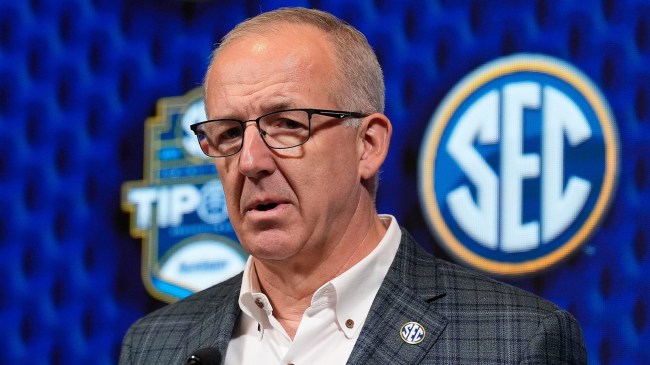
Gary Cosby Jr.-Tuscaloosa News / USA TODAY NETWORK via Imagn Images
The NCAA made a major shift in policy recently when it announced that, starting Nov. 1, college athletes would be allowed to gamble on professional sports without repercussion.
The move marks a significant change from the previous policy, which stated that athletes would be either temporarily or indefinitely suspended if they were caught betting on games, even in the professional ranks.
The new plan drew immediate backlash, with Pitt football coach Pat Narduzzi speaking out fervently against the change and calling gambling a “disease.”
“It’s absolutely one of the stupidest decisions I’ve ever seen,” Narduzzi said. “First of all, it’s a habit. It’s no different than smoking, drinking, doing drugs, it’s a bad habit. I don’t think anyone here encourages you guys to go out drinking and getting smashed on a Friday or Saturday night, or at a ball game.
“It’s a disease. I mean, you saw the same day that comes out, there’s a disease in the NBA with what’s going on over there.”
Now, more college coaches and administrators are joining the fight.
SEC Commissioner Greg Sankey Asks NCAA To Reverse Gambling Decision
Longtime SEC commissioner Greg Sankey, in line with Narduzzi, recently penned a letter to NCAA president Charlie Baker asking him to reverse the decision.
“This policy change represents a major step in the wrong direction,” Sankey said, per The Athletic.
“The integrity of competition is directly threatened when anyone with insider access becomes involved in gambling. Even when the wagers are placed on professional sports, the simple act of participating in gambling normalizes behavior, blurs boundaries and erodes judgment,” Sankey added.
The NCAA claims the move is intended to promote healthy gambling habits. However, not everyone is convinced.
“The NCAA’s policy has long stood as an expression of our collective integrity, and its removal sends the wrong signal at a time when the gambling industry is expanding its reach and influence,” Sankey wrote.
Sankey and Narduzzi both cited the recent NBA gambling scandal as a cause for concern.
However, had they not made a change, the NCAA may well have had no legal recourse to prevent athletes from gambling on games not under NCAA jurisdiction.