


Mehmet Yaren Bozgun/Anadolu via Getty Images | THOMAS CORDY/PALM BEACH POST / USA TODAY NETWORK via Imagn Images
One of the pilots in the Learjet 60 crash has been identified
The co-pilot of the private Learjet 60 plane that crashed in Florida on Sunday, November 1, killing all nine people aboard, has been identified as 20-year-old Nathalia Gadelha Filgueiras. Filgueiras had been flying planes since she was a teenager and received her pilot license while still in high school.
According to reports, Nathalia Filgueiras earned her private pilot’s license at just 17 years old while attending high school, remarkably obtaining her aviation credentials before even getting her driver’s license.
20-year-old co-pilot Nathalia Gadelha Filgueiras identified as victim of Florida Learjet crash that killed nine
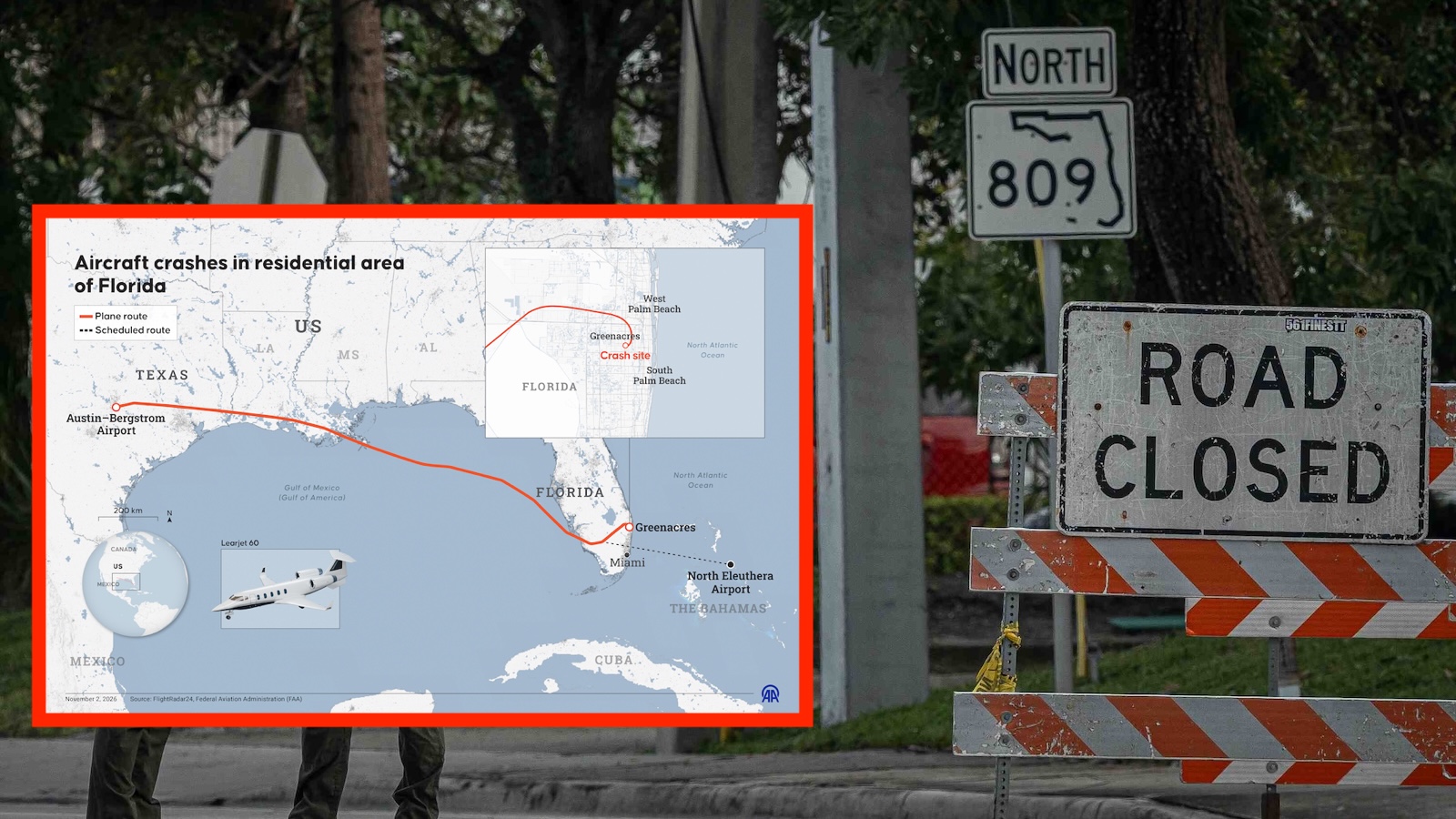
Filgueiras was serving as the co-pilot of a Learjet 60 that was traveling from Austin, Texas, to the Bahamas when it suddenly began losing altitude before crashing in a residential area near Greenacres, Florida, around 12:50 p.m. on Sunday.
“We’re out of time,” Filgueiras said over the radio just before impact.
At this time, her co-pilot — referred to in the harrowing cockpit audio as “Jack” — has not yet been identified. All nine people aboard the aircraft were killed in the crash, which left a massive crater near a residential community in Palm Beach County.
In an interview with the New York Post, Filgueiras’ mother, Camila, expressed pride in her daughter’s accomplishments and explained that she had always worried about the dangers of her chosen profession.
According to her family, Filgueiras had been passionate about aviation from a young age and began taking flying lessons in 2020. By the time of her death, she had accumulated approximately 1,300 flight hours and earned multiple aviation certifications, including commercial and flight instructor credentials.
The circumstances surrounding the crash are particularly harrowing, as air traffic control recordings captured the flight crew desperately trying to regain control of the aircraft after encountering icing conditions and moderate turbulence. The jet began descending at a rate of 10,000 feet per minute before accelerating to more than 20,000 feet per minute. Flight tracking data reportedly showed that the aircraft’s rate of descent eventually exceeded 32,000 feet per minute.
The Federal Aviation Administration and National Transportation Safety Board are investigating the accident. While the flight crew reported turbulence and ice accumulation shortly before losing control, the official cause of the crash has not yet been determined.
While the official cause of the crash is under investigation and has not been confirmed, hobbyists and pilots on social media believe the icing and turbulence led to a phenomenon known as a “Mach tuck.”
A Mach tuck is an aerodynamic phenomenon that can occur when an aircraft approaches the speed of sound, causing its nose to pitch downward due to changes in airflow and pressure around the wings. The effect can make the plane increasingly difficult to control, particularly at high speeds, as the pilot may struggle to pull the nose back up. If not corrected, a Mach tuck can lead to a dangerous, rapidly accelerating dive.