


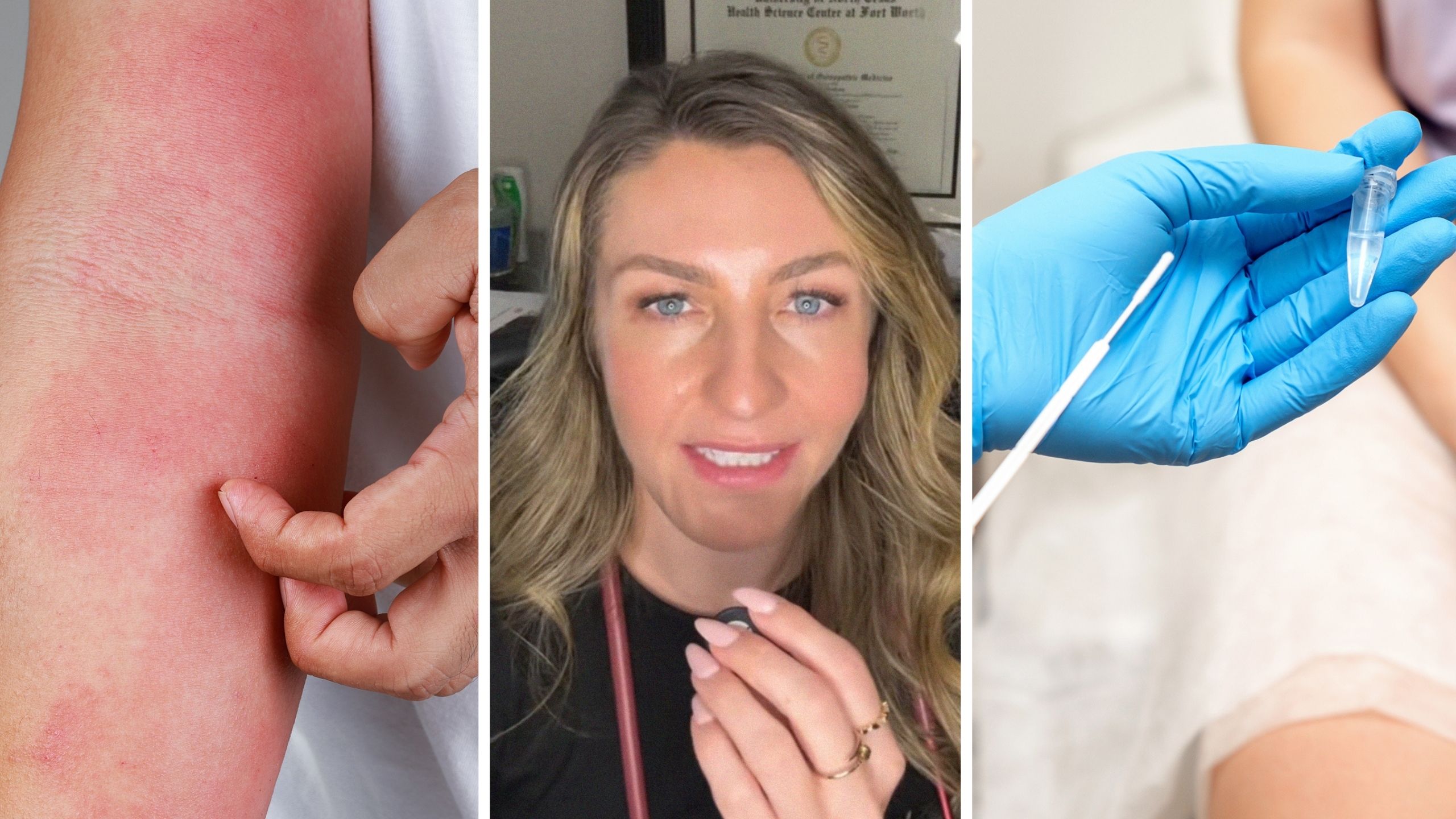
If you’re engaging in intimate activity, it’s good practice to get regular check-ups. However, according to TikToker and physician Doctor Andi (@your.doctor.bestie), there might be a new STD that is hiding in plain sight.
In her video, Andi explains that this STD, which is known as Trichophyton mentagrophytes type VII (TMvii), isn’t a virus or bacteria. It’s actually a form of ringworm.
What Is TMvii?
While some STDs have no symptoms, Andi claims that TMvii shows up as a painful, itchy, and inflamed rash, which can look like eczema, razor burn or generally irritated skin. The Cleveland Clinic notes that these rashes are usually ring-shaped. Andi goes on to note how this rash can show up on the genitals, inner thighs, buttocks, face, and any body part used for sexual activity.
The Duke Global Health Institute (DGHI) highlights the same body parts except for the face. Then, Andi says that while this is mostly being reported in gay men, it can impact anyone sexually active. Still, it is worth noting that the Cleveland Clinic said that sex workers are also at a higher risk.
The main problem with TMvii currently, she claims, is that people are being misdiagnosed and getting prescribed ineffective over-the-counter creams. She argues that, effectively, people are roaming around with this STD, thinking it’s something else. While the Cleveland Clinic and the DGHI don’t mention misdiagnosis, the Cleveland Clinic notes that anti-fungal creams don’t work on this type of fungus.
As for the diagnostic process, Andi warns that it isn’t straightforward: you need a skin sample and a biopsy. This is consistent with what the Cleveland Clinic says. Ultimately, the doctor encouraged people to get checked out if they have a rash in an intimate area. She warns that this STD is “flying under the radar, and that’s exactly how it spreads.”
The video garnered 440,400 views. BroBible reached out to Andi via Instagram direct message.
What Did She Say In Her Follow-Ups?
In her first follow-up video, Andi added that this STD was first discovered in 2024. However, the DGHI notes that this fungus was first discovered in Europe in 2023. She added that while it is technically possible to get STDs from shared spaces like the gym, this rash generally happens due to closed, prolonged skin-to-skin contact like sex. Indeed, the DGHI reports that “transmission during intimate encounters is a key driver.” This body also notes that shared items like towels or bedding also pose an albeit smaller risk.
Meanwhile, in a second follow-up, Andi said there are no routine screenings. She claims that you can be screened at primary care, urgent care, and a dermatology clinic. However, the Society for Disease Prevention notes that this issue emphasizes the importance of testing for fungal infections in routine screenings.
How Did Commenters React?
Some commenters were confused about how the STD emerged. “Where did this even come frommmmmm?” one asked. “Where did it come from though? Like how did it start affecting people before it started spreading as an STD?” a second queried.
Others thanked their lucky stars that this isn’t a problem for them. “It’s a wonderful time to be single and celibate,” a third quipped. “I love being celibate,” a fourth echoed. While a fifth wrote, “I’m excited that I get to scroll past this because I’ve been single since 2022 so zero STDs for me.”
What Else Should You Know About TMvii?
Cleveland Clinic goes into more detail about the symptoms of TMvii. The site notes that these rashes are often ring-shaped with a raised or darkened edge. It is often coloured red, pink, or purple and is generally discolored compared to the skin around it. The rash is also reported to be itchy, painful, scaly, or blistered.
TMvii can lead to more severe bacterial infections that need hospital treatment. It can also cause scarring.
@your.doctor.bestie There’s a new STD: TMVii #doctorsoftiktok #sexualhealth #menshealth #std #gaytiktok
Tom Carpino is the Hock postdoctoral research fellow at Duke Global Health Institute. In a statement as part of a press release, he said: “TMvii can resemble other skin conditions or sexually transmitted infections, so proper evaluation is important. The lack of awareness among the highest risk individuals and communities, combined with the lack of wide-scale testing and reporting from clinics, are ingredients for a very serious epidemic to go under the radar.”