



Lexie Moreland/WWD via Getty Images
John Turturro wishes his parents could see him now
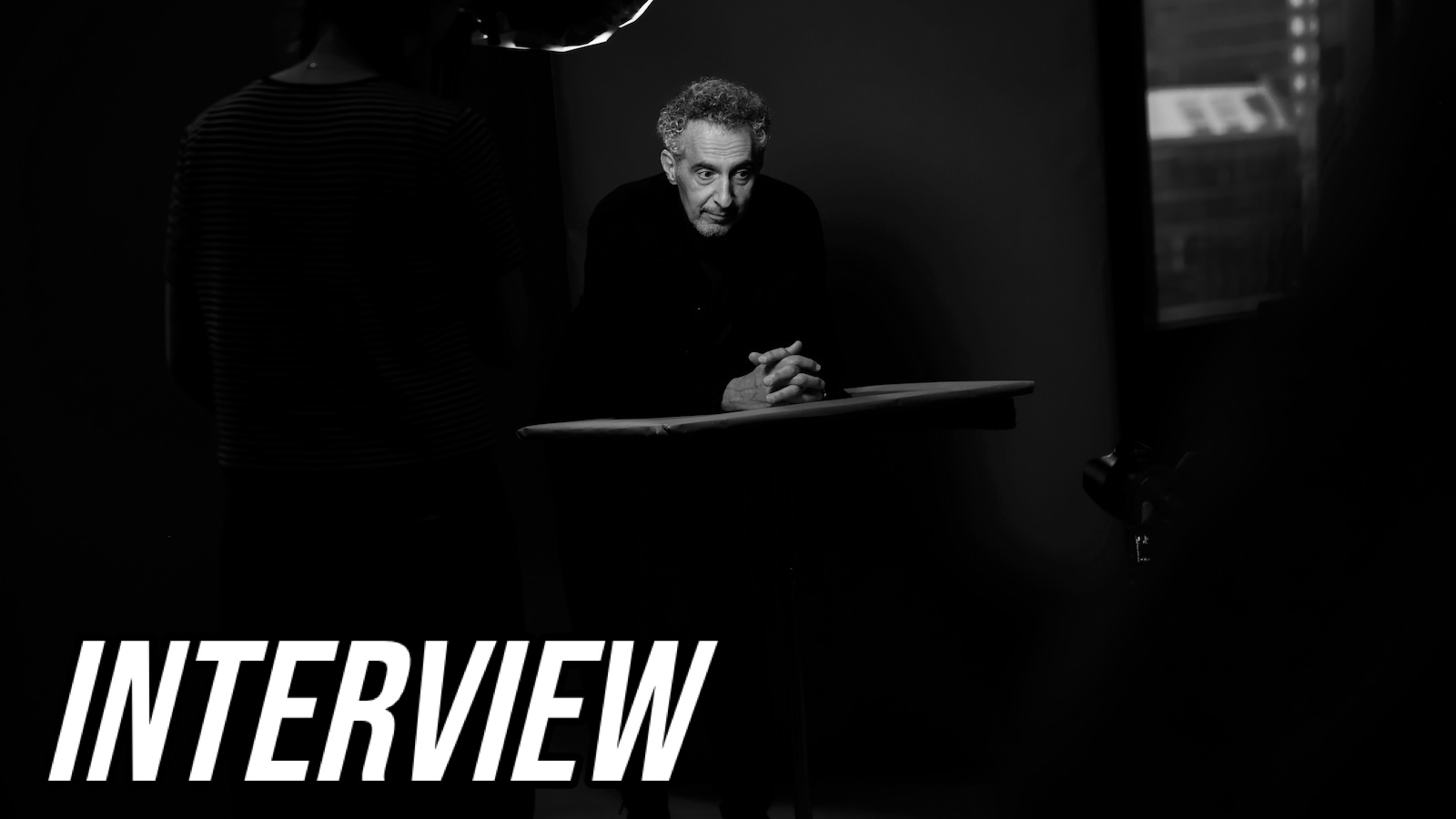
Watching The Only Living Pickpocket in New York makes John Turturro wish his parents could see him in it. He can also recognize their presence in the performance. “They’re in that movie,” he says. “They’re there.”
In conversation with BroBible’s Eric Italiano, acclaimed actor John Turturro connects the film’s tenderness to his own experiences of loss and caregiving — its story of a man trying to survive a changed city gives him room to explore what it means to devote a life to someone else, and what the people we lose leave behind.
The conversation moves from those personal connections to James Gandolfini’s vulnerability, the wounded lawyer Turturro played in The Night Of, and his collaborations with Matt Reeves and the Coen brothers.
Throughout, he returns to the experiences an actor carries into a role: “I’m surrounded at my age by many, many ghosts, but you either incorporate them or you don’t.”
On The Only Living Pickpocket in New York, the actor talks about caregiving, the people he has lost, and the lives that find their way into his work.
Sacrifice and the work of caregiving
Eric Italiano: I want to start this with a quote rather than a question — “If one asks why the great civilizations like Greece and Rome collapsed, the real answer is that they were exhausted.” Is that the story of this film?
John Turturro: I don’t get that analogy completely.
My read is that this is a very smart guy, and in the face of what I see as adapt or die, he chooses death. And my read on that is he’s just exhausted.
He’s struggling to survive in a world that has changed, but I think he’s willing to sacrifice for someone and do something that he really hasn’t done throughout his life. Maybe in the last five years he’s done it, since she’s been sick, or three years, but he also is willing to play the game, to play his hand.
So he’s leaving something. He’s giving something away. He’s leaving something for the person who he’s taking care of. It’s a double-edged sword. He’s not sacrificing himself for nothing. He’s sacrificing himself, and at the same time he is doing something that is going to take care of that person.
I don’t want to assume, but have you seen Scorsese’s Shutter Island?
No, I never have.
Okay, well, then the point won’t make sense.
I don’t base what I do on any other movie.
What I was going to say is that film ends with a character who sort of knowingly accepts his fate, and I just got a similar vibe from—
Well, no, he accepts his fate after he puts everything in order. He’s doing something. He’s saying, “Let’s play it, because I took from the wrong person. So if I run away, I’ll never be able to take care of Rosie.”
That, to me, was the draw of it. I think people, when they watch the movie, they’re really moved, but at the same time they realize you’re doing something for someone else. And that’s one of the messages of the movie, that that’s an important thing.
Well, I’m all too aware of that. This hit me in quite a personal way. My mom passed away of cancer, and I watched my dad take care of her morning and night for five years. And to me, it felt like he entered a higher plane of love, like something beyond love.
While you’re obviously an experienced pro who has, I’m sure, portrayed the emotion of love before, I’m curious where you drew this version of it from and if you based it on any personal experience.
Yes. I mean, sure. Someone my age has experienced a lot of loss. Also caretaking, and being a guardian of someone for many, many years. And it was not an easy way to take care of someone, especially when someone has mental problems, severe mental problems, and sometimes that could be really abusive.
That’s a very solitary thing, what your father did too. That’s when you’re tested. That’s when you see what you’re made out of. That’s when you say, “Well, am I going to grow a little bit?” And this is what it’s about. It’s about me sacrificing some of my life. I’m giving my life away in some ways, and you find out who you are and what your level of resiliency is.
So that really affected me within this fantastic structure of a guy trying to navigate his life to survive within 36 hours. The structure actually helps that. But I felt any moment that we could have to not alleviate the tension, but to juxtapose the tenderness with the tension of the story, with a guy who everything has changed around him.
The entire world has changed around him, but he’s not depressed about it. He’s still thinking on his feet like that: “I’ve got to figure this out little by little by little.” It’s like looking for the right doctor or the right treatment. How much do you invest in that?
That, to me, was this beautiful thing, and I have a lot of experience doing that. My hat’s off to your dad, you know what I mean?
Living with ghosts
Was this a therapeutic thing? Because it hit so close to home, why did you decide to take on this role?
Everything is what I do in my life. We all grow up in different situations, volatile situations, crazy people, this and that. As long as you have some kind of anchor, it’s been a way of… For a lot of people, it’s an escape from their life. For a lot of people, it’s an articulation of everything you’ve seen.
So I don’t use the word therapy, but definitely you’re able to express something that maybe you are affected by. My job is to affect, tell the story and to affect you, and you could say, “Yeah, I know what that is. That really gets me. That resonates with me.” And everyone is different that way.
For me, it was a lifeline, discovering to do this. And I’ve done all different kinds of plays and movies and things like that. Sometimes it’s a stupid comedy or whatever, but when I can do something with this kind of complexity and variety, it’s a gift. Because there’s a lot of people that it reminded me of, whether they’re pickpockets or plumbers or teachers or whatever.
And you can use your imagination. As you get older, you just have way more experience. You know what it is to be a father, to be a husband, to miss things, to have regrets, to have achievements, to be disappointed, to be really brokenhearted. I’m surrounded at my age by many, many ghosts, but you either incorporate them or you don’t. And I think the word therapy is… I’m not a therapist, but I feel—
I didn’t mean it in a literal—
It’s great what you’re saying, because in a way you are kind of saying it’s a civilizing aspect to tell a complex story. If you could feel something, then I’ve done my job, and if I’ve held your attention and taken you in different routes. Because expression is very worthwhile, and I think it’s undervalued. You know what I mean? It’s undervalued, and a lot of people aren’t celebrated.
Your dad’s not going to win Caretaker of the Year award, you know what I mean? But you know what he did, and he knows what he did. And you’re left with that example. You’re saying, “Wow, I saw something that was another level of that.”
This love word, the most ambiguous word possible, and people say, “I love you, love you.” You’re like, “Yeah, right.” But what does it mean to really endow? And that has to do with the sacrifice. And maybe it could be the ultimate sacrifice. Maybe.
You say that your goal is to make people feel something. The two most emotional moments I had with this film were the start, where the LCD Soundsystem song kicks in, and then the end. Specifically, the directorial decision — and I’m going to try not to spoil this — not to show in camera your character’s fate. Now, was that direction in the script when you first got it, or is that something you guys found?
No, I mean, all the violence is off camera. What you see is the cost of the violence. The cost of it. And if something happened to someone you were close to, you feel it. They feel it afterwards.
So many movies are just about the act of violence, but not about what happens afterwards or how the person reacts to it. So I thought that was very interesting, because you don’t have to show everything.
And also, a person can disappear, but their spirit can remain. It remains. You have your mom, my mom. They’re with you somewhere. They’re with you. It takes a long time to incorporate that, but they are with you.
You make a great point, because every time I hear that, I’m like, “I would love to feel that way, but I just haven’t arrived at that place yet.”
It takes a while. It’s like standing at the edge of the ocean and watching the water go in and go out, go in and go out. You’re saying, “Well, it still hurts.” It still hurts a lot, but eventually you realize the things that someone, if they gave you something, that comes to be.
When I watch Pickpocket, it makes me really misty-eyed this way. I wish my parents could see me, could watch this movie. But maybe… But they’re in it. They’re in that movie. They’re there.
That’s a beautiful sentiment.
The Night Of and James Gandolfini
Given the length and breadth of your career, I’m going to ask you about something that I feel like has gone under the radar, and please correct me if I’m wrong. I want to ask you about The Night Of. Is that something that you get asked about a lot?
The people who’ve seen it do.
Your performance in that show moves me to no end, and I think it highlights something that you do in this film as well. It’s bringing this warmth to wounded, imperfect people that you find yourself desperately rooting for, even when they make the wrong choices.
Coincidentally, that’s a characteristic that James had too. You, of course, not only took over this role from him, but also directed him in Romance & Cigarettes. I’m curious: What do you think allowed him to make even his most intimidating characters feel so vulnerable? And do you see any connection between you two as performers in that sense?
Well, James really didn’t do very much of the role. He did like, one day, and he had a deal there. Zaillian had known me. He wanted me to be in Bobby Fischer, and he actually told me when he was writing it, he thought about me, but James had the deal.
I said, “Well, I’ve got to see the pilot,” and James was barely in it. I talked to his wife. I read everything. I said, “He didn’t do anything really yet, so I can make this my own.”
It was brilliantly written by Richard Price and Steve Zaillian, but James had a delicacy to him and a vulnerability. He had a femininity in him too. And that’s why I cast him in Romance & Cigarettes, because I didn’t want to be the lead. It was just too hard to do. And I thought he did a wonderful job.
I had to push him at times and things, but he had a lot of self-doubt, sometimes self-loathing and stuff. He was a complex guy and didn’t always take care of himself.
But before I did The Night Of, I asked his wife. I said, “I want you to feel good about me doing it.” She said, “Oh, we want you to do it.” So that gave me extra oomph to do it. But it was brilliantly written.
James had that contradiction, and these are people who are wounded and they make something of their lives. The guy in The Night Of was completely capable of being a great lawyer, but he didn’t have the constitution for it, the stomach for it. Some people have the stomach and they’re not that smart, and he was.
I would have loved to have done even another case with that, but they could never agree, even though HBO wanted to. But that’s something I’m very proud of. I mean, the whole cast is great, and it was a character that I could have just… Once I did so much research and stuff like that, something happened, and I just got lost in it. I shot for like eight months.
For a show about procedure and murder, and it’s always raining — it’s a beautiful show.
Finding Carmine Falcone
I want to swing over to a character that has none of that warmth, and that’s Carmine Falcone. People throw around the word noir a lot, but what they’re really saying is crime. Your character, however, is probably the most classical noir element of the film. He has more in common with an Edward G. Robinson character than he does with Poison Ivy.
What were your conversations with Matt Reeves like about landing on the right pitch for him?
Well, I read the books that this was all based on, all the long comics that came out in the early ’90s. …
And that really gave you what their influences were in the comic. From there, I was concerned about the violence. I said, “I don’t want to be doing certain things,” and he was okay about that. I said, “That’s the way it is. I’m not doing certain things.” I said, “If it’s implied, it’s okay.”
And I also thought he should be sort of a masked man, like a lot of these guys with their glasses and stuff. I told Matt, “If I don’t get to wear the glasses, I don’t do it.” I said, “Batman has a mask. Carmine has a mask.”
So I used the comics a lot, and I realized the films that they were referencing. It was brilliantly shot. Matt, we tried all different things, and he was very collaborative. I really found it was a creative experience.
I tried to bring a certain gravitas to that, but I did take it from a lot of the comic things, which took from movies that were based on some real-life things. So it was a fun thing to work on. And I also grew up liking Batman a lot, because he didn’t have all these superpowers and stuff like that. But I did have certain parameters that I was willing to do.
A lifetime with the Coens
Your work with the Coens: You’ve done four films with them, ranging from all great to stone-cold classics. When I bring up your work with them, what project does your mind go to first, and why do you think that is?
All the four films I’ve done with them, I’m very proud to be a part of. I don’t have one that I would say… Barton Fink, I was the lead. Some people think—
Not even in terms of how good it was, just in terms of where your mind goes. Like eating at the craft table or literally where—
I’ve always had great experiences working with them. They know me because I went to school with Frances [McDormand]. They’ve seen me do so many plays. I’ve directed one of Ethan’s plays.
Each thing is sort of singular. But the thing is, they’ve always asked me to do things—except the Jesus, because I had done a play where the character was a little similar—but they’ve always asked me to do things that they haven’t seen me do. I mean, that’s a great thing.
They’re always a little surprised. They said, “Well, we didn’t know what you were going to do exactly.” Because they’re so specific with their storyboards, even a lot of the costuming and the writing, but then the how, you can do it so many different ways.
They were also my executive producers … on Romance & Cigarettes. They were supportive of me casting James. They were just amazing friends in that process.
They’re really great guys. They’re human beings on the best level. They’re really smart, and they don’t think they’re the greatest. So you really want to please them, even if you have a tiny part or whatever.
Lebowski, people, it becomes like a religion. That’s like a whole philosophy. But O Brother, people adore it, and now they love Miller’s Crossing.
I was going to say, that’s the one that I’m partial to these days.
Yeah, I was just talking to someone today. They were saying, “Well, Fink’s my favorite guy, because I know all the lines from Fink.” I was like, “Well, that’s pretty good too.”
They’re almost from another world, because they’re real craftsmen. You can say artistic, you can use that word, but they do the work. And I’ve always had so much fun with them.
I want to please them because it’s like when you’re in first grade, you want to make your friend laugh. You want to make your friend happy. I’ll come up with things, and they’re like, “Wow, we didn’t know you wanted to do it that way.” But I’ve always had tremendous collaborations with them. Tremendous.
I just want to close here: the New York realism of Pickpocket this was so intense that I picked up that the guy you asked for bus directions even calls Manhattan “the city,” and that’s how I knew that this was the real deal.
That’s it. It’s the city. That’s it.

Vittorio Zunino Celotto/Getty Images for RFF
The Only Living Pickpocket in New York will begin a limited theatrical release in Los Angeles and New York City on October 23, then expand nationwide a week later.